
Unveiling Chongqing
- a mountain megacity
Welcome to China's most famous mountain megacity where conventional geography is turned completely upside down.
From layered architectural wonders to the vibrant pulse of local night life, Chongqing offers a sensory experience unlike any other in the world.
Chongqing Highlights
Chongqing is a vertigo-inducing metropolis where futuristic innovation blends seamlessly with rugged natural terrain.
Extreme Verticality

Chongqing is built on steep ridges, creating an '8D' multi dimensional urban landscape that sprawls across the confluence of two rivers.
Mountain Terrain
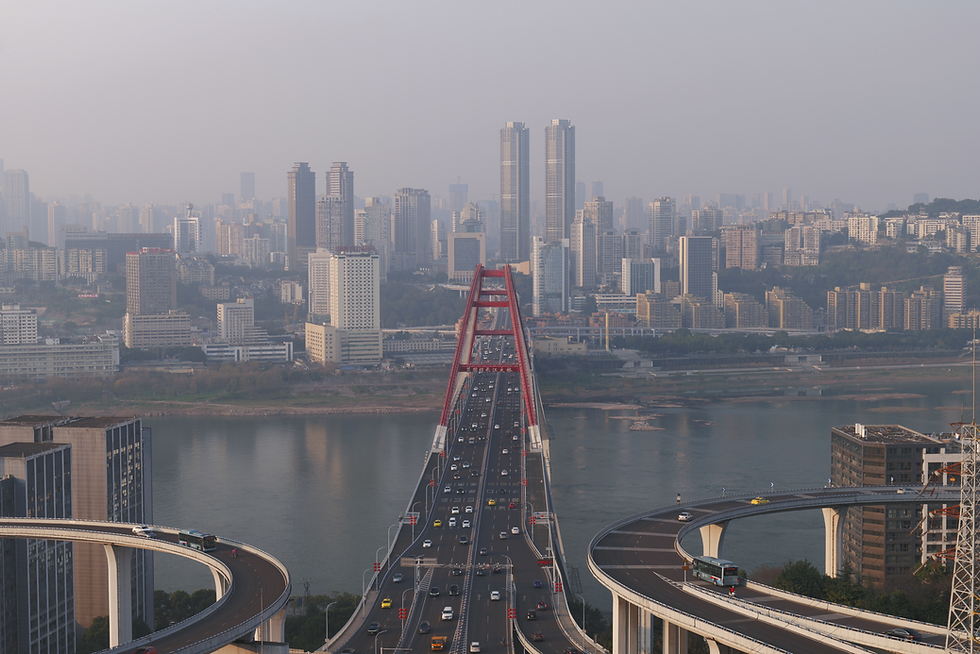
Navigate the unique topography of a city where roads exist on multiple levels and lifts and stairs are essential daily transport.
Urban Monorails

Experience the futuristic visual effect of trains passing directly through apartment blocks, a marvel of Chongqing engineering expertise.
Steeped in over 3,000 years of history, Chongqing has exploded from an ancient river outpost into a sprawling, neon-soaked municipality of 32 million people.
Anchored at the dramatic confluence of the Yangtze and Jialing rivers, this southwestern powerhouse is a place where deep-rooted regional traditions dance harmoniously with an unimaginable scale of urban expansion.


To explore Chongqing is to step directly into a living, breathing adventure. Beyond its gravity-defying architecture, the city boasts magnificent highlights like the glowing, multi-tiered stilted houses of Hongya Cave and Ciqikou with its ancient, winding alleyways.
Nature&Neon has expert knowledge of the city, transforming a complex, multi-level maze into an immersive unforgettable journey.
Roam the diverse architecture and sights across this vast city, including the iconic People's Liberation Monument, and dive deep into the city's legendary culinary scene.
Here there is the opportunity to indulge in Chongqing's signature world-famous and fiery spicy hotpot, or visit the vibrant night markets to sample a true taste of the local culture.


We take the stress out of navigating this vertical metropolis by providing exceptional, English-speaking local guides who reveal the hidden viewpoints and storied alleyways that most visitors completely miss.
From skipping the lines at top sights to securing front-row seats on the historic Yangtze River Cableway, we seamlessly coordinate your entry passes and exclusive regional experiences.
Chongqing is a wonder to behold. At every single turn, there is a new horizon to discover.
The Spiritual Pulse of Chinese New Year
THE EMOTIONAL, CULTURAL AND SOCIAL MEANINGS BEHIND THE WORLD'S LARGEST ANNUAL CELEBRATION
For Chinese people, the Spring Festival (Chinese New Year) is far more than just a calendar date or a feast of dumplings.
It is a multi-dimensional spiritual anchor rooted in three timeless themes: reunion, bidding farewell to the past and hope.
This vibrant celebration holds irreplaceable meanings that define the collective Chinese psyche.
No matter how far away life takes them, the Spring Festival calls everyone home. This massive annual migration is less about physical travel and more about emotional healing.
It is a vital time to compensate for months of absence with genuine companionship and to dissolve personal barriers with embraces.
On New Year's Eve, the food on the table is secondary; the true, core ritual is simply being together. Unlike the digital shift of the Gregorian New Year, the Spring Festival aligns with the ancient rhythm of agrarian civilisation.


Watch how the Chinese celebrate the advent of New Year with a huge fireworks display.
Falling near the beginning of spring, it marks the end of winter's dormancy and the start of new growth. Through rituals like sweeping away dust and hanging new poetic couplets, people leave behind the fatigue, regrets and bad luck of the past twelve months—effectively hitting a psychological 'format' button for a fresh start.
Traditions double as a profound confirmation of identity. Rituals like ancestor worship, staying up late on New Year's Eve, exchanging festive greetings and passing out red envelopes are collective memories flowing in the blood. Engaging in these customs answers the essential human questions: 'Who am I?' and 'Where do I come from?' For overseas Chinese communities, the festival serves as a vital anchor to their cultural roots.
Modern life can strain or distance personal relationships, but the Spring Festival acts as a social lubricant.
Friends who have lost touch naturally restart conversations with simple holiday greetings. Meanwhile, rigid workplace hierarchies temporarily dissolve into warm wishes of 'Happy New Year.' The holiday reconstructs social networks using affection, warmth and mutual respect.
Every detail is a deliberate investment in a brighter future. Red envelopes given to children, the "福" (good fortune) characters pasted on doors and the traditional fish on the dining table—symbolising abundance year after year—are physical expressions of optimism.
These traditions reflect the ultimate resilience of the Chinese people: no matter how difficult the past year was, the next one is always worth looking forward to. The Spring Festival is a mirror. It beautifully reflects an unshakeable attachment to family, a deep reverence for the passage of time and an unending enthusiasm for life itself.
